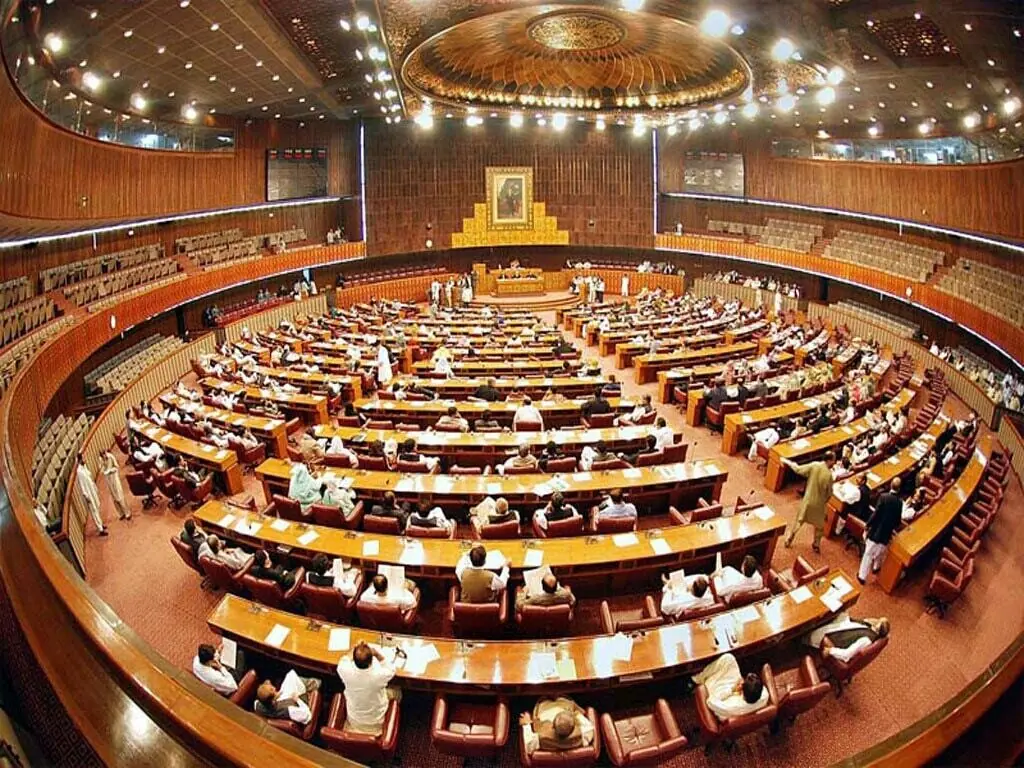
The National Assembly of Pakistan has passed an amendment to the Fina ncial Institutions (Recovery of Finances) Ordinance, 2001 (“FIO, 2001”), vide Financial Institutions (Recovery of Finances) Amendment Act 2026. The Amendment is sought to strengthen the foreclosure laws in Pakistan, so as provide a speedy mechanism for recovery of the banks’ stuck-up finance, secured against mortgage of the properties. FIO, 2001 is a special law. Enactment of special laws is a common practice amongst all the world jurisdictions, generally enacted in a tailored form to address certain particular issues affecting specific entities or classes of persons; or focusing on specific subjects, parties or areas; and sometimes, these are enacted to correct any mischief of law, or to fulfill specialized policy or political goals, also. This kind of legislation is although enacted in both common law and civil law jurisdictions, however, it is most frequently done in the developing countries, struggling to strengthen their legal landscape. In Pakistan, special legislation is also a common phenomenon. So much so, we are fond of even amending the constitution, which practice is not common in the world jurisdictions. There are many examples of special laws in Pakistan, like NAB Ordinance, 1999, Anti-Terrorism Act, 1997, Anti-Narcotics Force Act 1997, Prevention of Electronic Crimes Act, 2016, Pakistan Environmental Protection Act, 1997, Financial Institutions (Recovery of Finances) Act, 2001, etc. However, despite all this frequent special legislation in Pakistan, we see it very often that the purposes for which the special laws are enacted, are not fully achieved. One instance of such special laws in Pakistan is the legislation made for speedy recovery of banking loans & finances, etc. It started in the year 1978 through the Banking Companies (Recovery of Loans) Ordinance, 1978, which was then repealed by the Banking Companies (Recovery of Loans) Ordinance, 1979. The Ordinance of 1978 provided in its preamble that it was meant to provide summary procedure for recovery of loans of banking companies. Such procedure is generally available in the world jurisdictions, since it plays a vital role in stabilizing the banking sector, reducing credit risk, increasing credit availability and ultimately supporting the economic growth of a country. The said summary procedure as referred in the Ordinance 1978 & 79 was (and is available) in the general civil procedural law of Pakistan, i.e. Civil Procedure Code, 1908. The summary procedure, in short, allows the Court to Decree a Case immediately if the Defendant does not have any legal or factual grounds to defend the case. The Ordinance of 1978 & 1979 was then repealed vide the Banking Tribunals Ordinance, 1984; then by Banking Companies (Recovery of Loans, Advances, Credits and Finances), 1997; and finally, the present law, i.e. the Financial Institutions (Recovery of Finance) Ordinance, 2001 (FIO, 2001). All this took around 23 years, from 1978 to 2001. All these laws provided for summary procedure to adjudicate the banking loans or advances/finances but the result is that there are millions of banking recovery cases pending in the courts. There might be many causes to this issue. However, I believe that the most relevant problems to this issue are (i) irresolute legislation (ii) non-alignment of the special laws with the general procedural laws and (iii) assigning this jurisdiction to the high courts as to adjudicate the banking recovery cases, instead of assigning overall jurisdiction to the lower banking courts, specifically. The best illustration of irresolute legislation in this context is Section 15 of FIO, 2001. The said provision of the law gives the banks the right to sell the mortgaged property(ies) by themselves, without intervention of courts, in case of default by the customers/mortgagors. Nevertheless, this provision of law remains under contestation in the courts for a decade or so. In 2013, this provision of the law was struck down by the Supreme Court, on the grounds that it violated fundamental rights of customers. Subsequently, in 2016, FIO was amended to this effect vide the Financial Institutions (Recovery of Finances) (Amendment) Act, 2016, which re-enacted the said Section 15 of the FIO, 2001. However, it was again challenged in the Lahore High Court, leading to its suspension once again. Later, the Supreme Court held that the said Section of FIO, 2001 is within vires of the Constitution of Pakistan. And now, it is again being amended vide the latest Amendment Act, 2026, empowering the Deputy Commissioners to put the banks in possession of the mortgaged properties, while enforcing Section 15. This will re-initiate a new phase of litigation amongst the mortgagors and the banks, with regard to Deputy Commissioners’ powers. Interestingly, all such litigation arising from such disputes will go to the High Courts, in the form of Writ/Constitutional Petitions, instead of Appeals under the subject law. Apart from the above issue, the procedural scheme of the FIO, 2001 is too stringent; and eventually, the cases which could not meet the requirements of the subject law, cannot proceed, despite that the cases are legitimate. One such example, amongst many, is the recovery of bank’s stuck-up Sukuks financing. Sukuk financing provides Sharia-compliant alternatives to conventional bonds, representing partial ownership in tangible, halal assets rather than debt. Sukuk holders receive profits generated from underlying assets—such as real estate or infrastructure—through structures like leasing (Ijara) or partnerships (Musharakah) rather than interest payments (Riba). This type of financing is not reflected in the banks’ routine statements of accounts and generally, there are no debit/credit entries. Nevertheless, the FIO requires for each recovery suit which is brought before a banking court that it must have a set pattern of statement of account, failing which the suit will not have the benefit of speedy recovery and it will lead to general sort of trial of cases, thus struggling for years and years to have a decree. Similar is the dilemma regarding jurisdiction of banking courts. The Ordinance of 1979 introduced special courts for hearing banking recovery cases. Then the Ordinance of 1984 introduced special tribunals for the said purposes. Thereafter, the Act 1997 again established banking courts; and finally, the Ordinance of 2001 though again constituted banking courts but assigned this jurisdiction to the High Court as well, for the cases involving amount of Rs. 100m. So, firstly, it took years to reach a final decision that what courts would be required to handle speedy recovery of the bank’s stuck-up finances; and secondly, to conclude that whether the banking courts will have exclusive jurisdiction or else. This has resulted in thousands of pending cases in the high courts, since the high courts are not ordinary courts, and they have different conventions of the working. The issue of high court jurisdiction can be addressed in the manner as the Sindh Government did in the recent past, by amending the procedural civil law and allowing the civil courts to hear all cases without a capping of pecuniary jurisdiction. Through this amendment, all cases of original jurisdiction have been transferred from high courts to lower civil courts and the cases are proceeding expeditiously. In view of the said discussion, the question is that whether the new Amendment of 2026 to the FIO, 2001 will serve any purpose. The answer, probably, will be in the negative, for the reasons aforesaid which would remain there, since not addressed in the Amendment, 2026. Copyright Business Recorder, 2026
Irresolute legislation