
US Stocks open lower on the first day of the Fed's September 15–16 FOMC meeting as Brent crude rises above $107 and WTI tops $103 on fresh Houthi strikes on Saudi Arabia's southern energy facilities — with fed funds futures now pricing a 90% probability of a 25-basis-point hike tomorrow — while AI stocks face a second consecutive session of selling pressure after Anthropic, OpenAI, and Elon Musk all called for slowing the pace of AI development over the weekend.
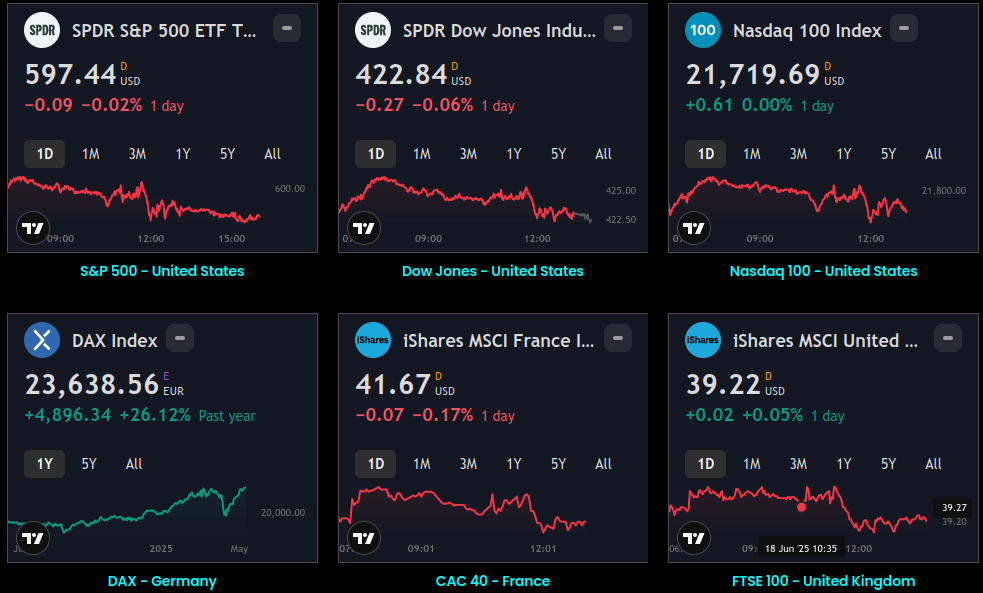
- Dow futures were down 266 points or 0.5% to around 52,155, S&P 500 futures declined 28 points or 0.4%, and Nasdaq-100 futures fell 90 points or 0.3% as of 3:20 a.m. ET — extending Monday's losses in which the S&P 500 fell 0.48% to 7,619.98, the Nasdaq slipped 0.56% to 26,186.41, and the Dow dropped 152.09 points or 0.29% to 52,421.20. At their lows Monday, the S&P 500 and Nasdaq were down 0.8% and 1.3% respectively before partially recovering as crude pulled back from intraday highs. The 10-year Treasury yield touched a 19-year high before easing, with Brent closing above $105 Monday — and crude extending those gains into Tuesday's premarket.
- Houthi rebels carried out further strikes against Saudi Arabia's southern energy facilities Monday and continued operations around the Red Sea and Bab el-Mandeb Strait, following the weekend attacks that damaged Saudi Arabia's East-West pipeline — the kingdom's bypass route around the Strait of Hormuz. Analysts estimated the combined disruptions could affect the equivalent of 4%–5% of global oil supplies at their peak, with Saudi export stocks potentially running out within five to seven days if the pipeline does not resume. Brent crude futures for November delivery rose 1.25% to $107.00 a barrel and WTI futures for October advanced 1.27% to $102.68 in Tuesday's early trading — Goldman Sachs raised its near-term oil price forecasts on Monday, now targeting Brent near $115 if the Saudi pipeline disruption is prolonged.
- The FOMC meeting begins today, with the rate decision and Chair Kevin Warsh's press conference due at 2:00 p.m. and 2:30 p.m. ET Wednesday. Fed funds futures are pricing roughly a 90% probability of a 25-basis-point hike to 3.75%–4.00% — the first rate increase of the Warsh era — up from 86% entering the week and the highest conviction reading since the cycle began. The three dissenting members at the July 28–29 meeting argued forcefully for an immediate hike then, and Goldman Sachs abandoned its no-change call on Monday — now characterizing the expected hike as a likely "one and done" move. August CPI of 3.4% and PPI of 5.3% both came in at or above consensus last week, and the September 14 Saudi pipeline shutdown now ensures the October inflation readings will be hotter still. Americans face a renewed paycheck squeeze as inflation at 3.4% year-on-year outpaces average hourly earnings growth of 3.1% — a real wage contraction that has weighed on consumer sentiment throughout the summer.
- AI stocks face a second day of broad selling after Anthropic CEO Dario Amodei published a weekend essay arguing AI companies need to slow the development pace of their most capable models due to safety risks — calling it "the toughest dilemma" when China is unlikely to follow suit. OpenAI CEO Sam Altman agreed the industry needs to "pace the frontier" and Elon Musk backed Amodei's view. The sell-off spread across every node of the AI complex Monday: Nvidia, AMD, Broadcom, TSMC, Lumentum, Coherent, CoreWeave, Nebius, Palantir, and AI power plays including Bloom Energy, Vistra, and Talen Energy all fell. Former Google DeepMind researcher Bilal Chughtai separately raised concerns about superintelligent AI systems exceeding human capabilities emerging within years and presenting systemic risks — adding to a broader reconsideration of AI development timelines that has rattled the trade's most optimistic assumptions.
- The Empire State Manufacturing Index for September showed continued expansion at 20.6, matching August's four-year high and providing a modest positive offset to the AI and geopolitical headwinds. The August retail sales control group — which feeds directly into GDP calculations — is due at 8:30 a.m. ET Tuesday alongside industrial production, capacity utilization, and the NAHB Housing Market Index. The week's other key data points include September's Philadelphia Fed Manufacturing Survey Thursday and the University of Michigan's final September consumer sentiment reading Friday.
- Japan's Nikkei 225 fell 518 points to 63,492 Monday — its lowest close in more than a month — with chip equipment names and energy-import-sensitive industrials leading declines as Brent topped $109 intraday. Tuesday's Nikkei futures contract implied a further decline, with the index approaching a key technical support level near 63,000 that analysts flagged as critical to preventing a deeper correction. The BOJ meets Thursday and Friday this week — market pricing puts a September rate hike probability at roughly 60%, the highest of the year — with the BOJ statement due Friday morning Tokyo time. The Shanghai Composite dipped just 2 points to 3,885 on Monday as mainland Chinese markets maintained their relative insulation from the Hormuz and Bab el-Mandeb disruptions. The Hang Seng rose 111 points to 24,917, a regional outlier, as Chinese tech names outperformed on domestic AI infrastructure investment flows. South Korea's KOSPI fell 3.6% Monday, and the Nikkei's Chicago futures were last pointing to an open near 63,260 for Tuesday's session. Australia's S&P/ASX 200 was mixed as energy producers gained on oil's surge but rate-sensitive sectors fell. European futures pointed lower with DAX futures down 0.4% to 25,440.
Global Indices:
 Sage Kakkat
Active Stocks:
 Sage Kakkat
Stocks, ETFs and Funds Screener:
 Sage Kakkat
Forex:
 Sage Kakkat

CryptoCurrency:
 Sage Kakkat

Events and Earnings Calendar:
 Sage Kakkat
This daily briefing is curated from a wide range of reputable sources including news wires, research desks, and financial data providers. The insights presented here are a synthesis of key developments across global markets, intended to inform and spark thought.
No Investment Advice: This content is for informational purposes only and does not constitute investment advice, recommendation, or endorsement.
Timing Note: Each edition is assembled based on the market context available at the time of writing. Timing, emphasis, and interpretations may vary depending on global developments and publishing windows.
