What in the World!
 What in the World!
For much of the modern financial era, the dominant assumption underlying economic growth was that capital represented the principal constraint on expansion. If sufficient financing could be assembled, productive capacity would eventually follow
 What in the World!
Türkiye enters 2026 in the middle of the most consequential monetary policy experiment in emerging market history.
 What in the World!
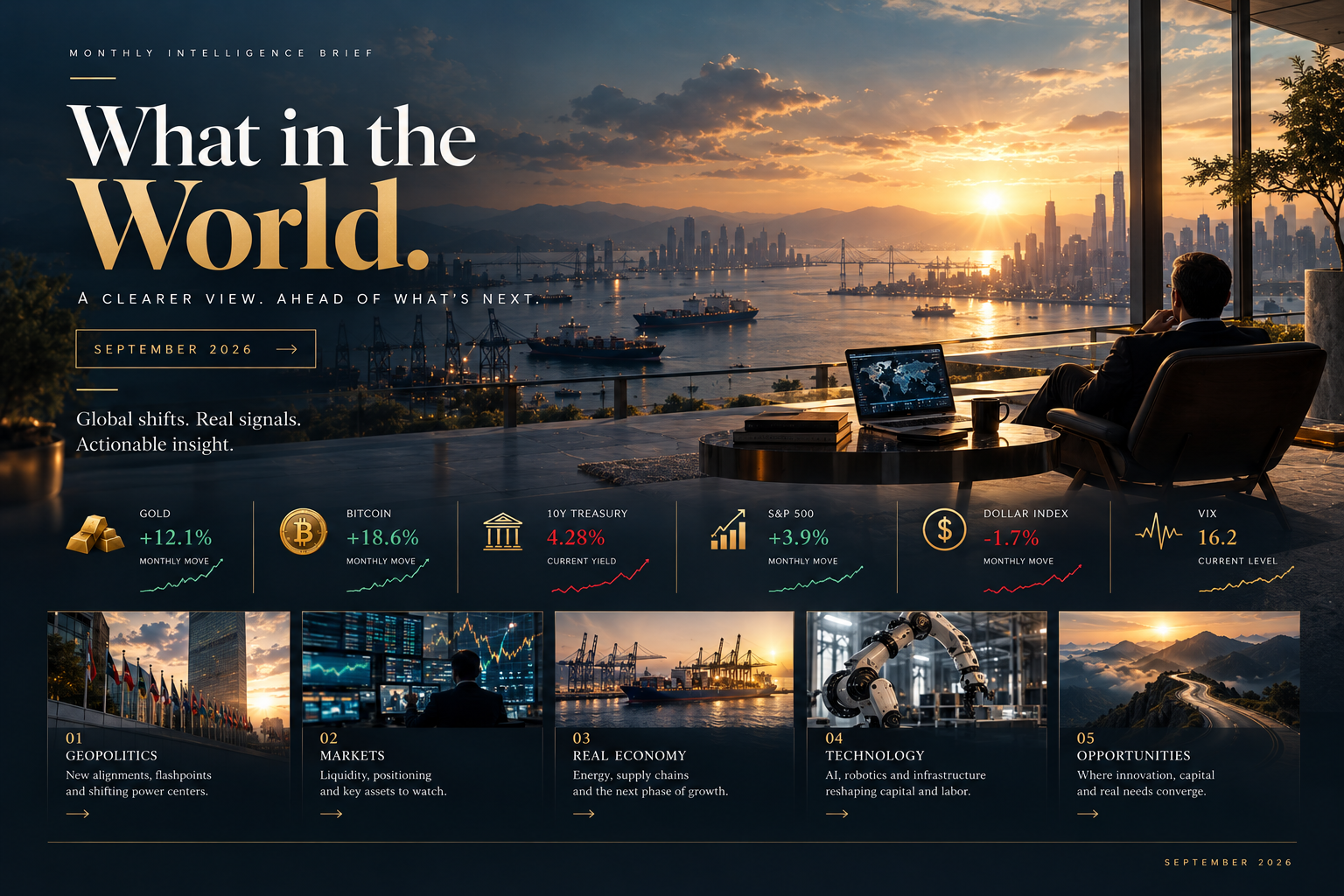
September 2026 delivered a jarring reminder that the global macro environment remains deeply unsettled. The Federal Reserve's unanimous 25bps hike — the first increase since July 2023 — shattered the narrative of a completed easing cycle
 What in the World!
Economics teaches us to think about wealth through production. Nations become richer by producing more goods and services, workers become more productive through investment and technology
 What in the World!
Spain has emerged as the most surprising positive macro story in the developed world over the past three years. While Germany stagnated and France struggled with fiscal credibility
 What in the World!
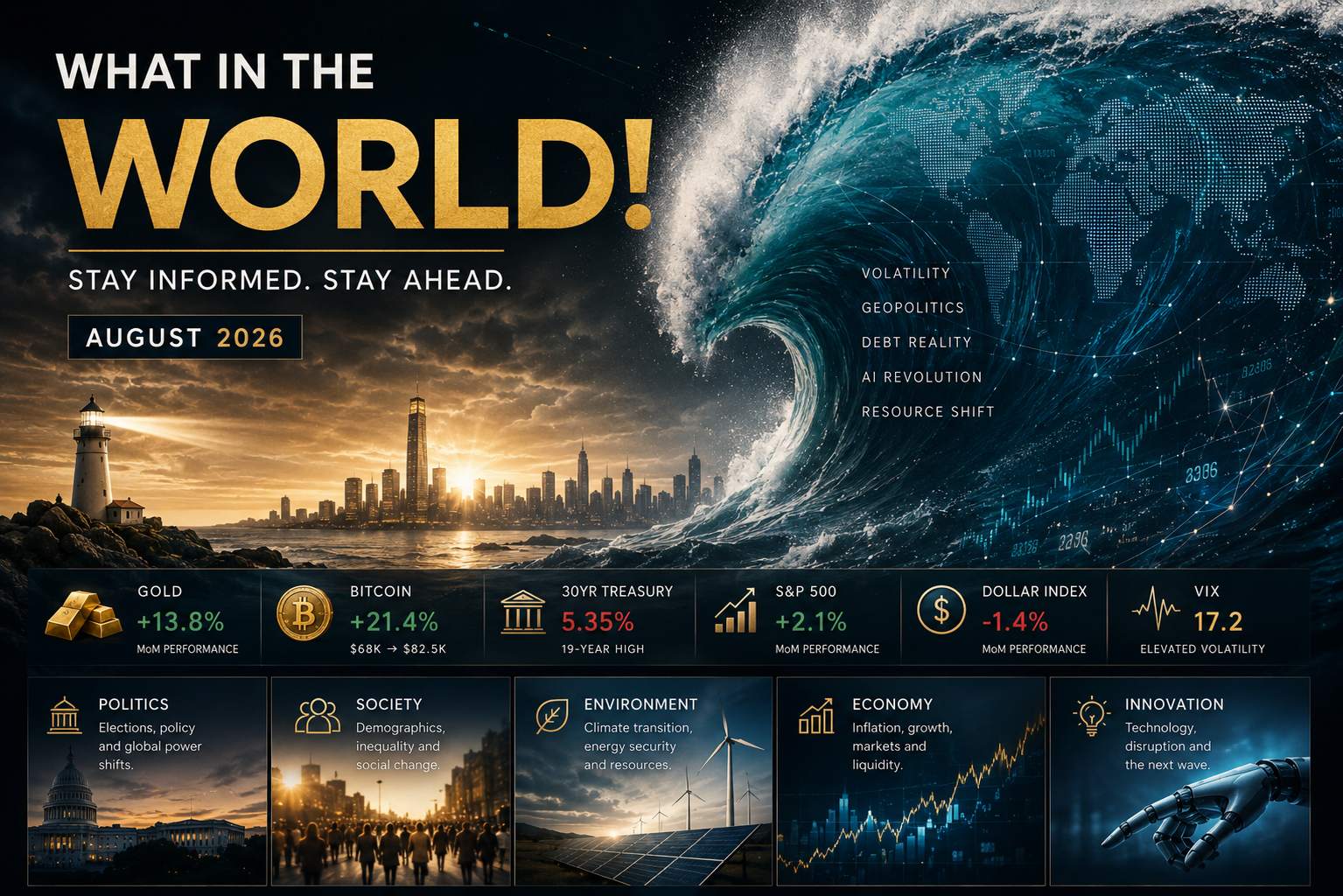
August delivered the clearest test yet of the global economy's two competing forces. The Iran war — now entering its sixth month with no diplomatic resolution after the June MOU expired on August 18 — kept oil prices elevated and inflation sticky
 What in the World!
Europe’s most contradictory economy — world-class luxury and nuclear, chronic fiscal deterioration and political deadlock
 What in the World!
Financial repression sounds like an extraordinary policy. Historically, it is closer to the ordinary condition of heavily indebted states. The phrase describes a collection of policies through which governments reduce the real cost of their obligations
 What in the World!
For much of the post-war period, governments presented economic stability as both a policy objective and a social contract. Stable prices, expanding employment, predictable growth, and rising living standards formed the foundation upon which democratic legitimacy and market confidence were built
 What in the World!
Norway occupies a position in global macro that no other country quite replicates: an extraordinarily wealthy, small, open economy that has converted finite hydrocarbon extraction into a permanent, perpetually-compounding sovereign wealth fund
